
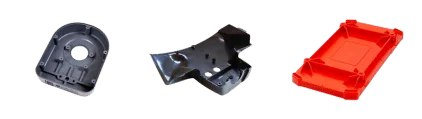
Every cast part begins with the quality of the master.
A machined or printed master establishes geometry and surface condition. Silicone is formed around it and split to create a flexible mold. Mixed polyurethane is introduced under vacuum to reduce trapped air before curing, demolding and finishing.
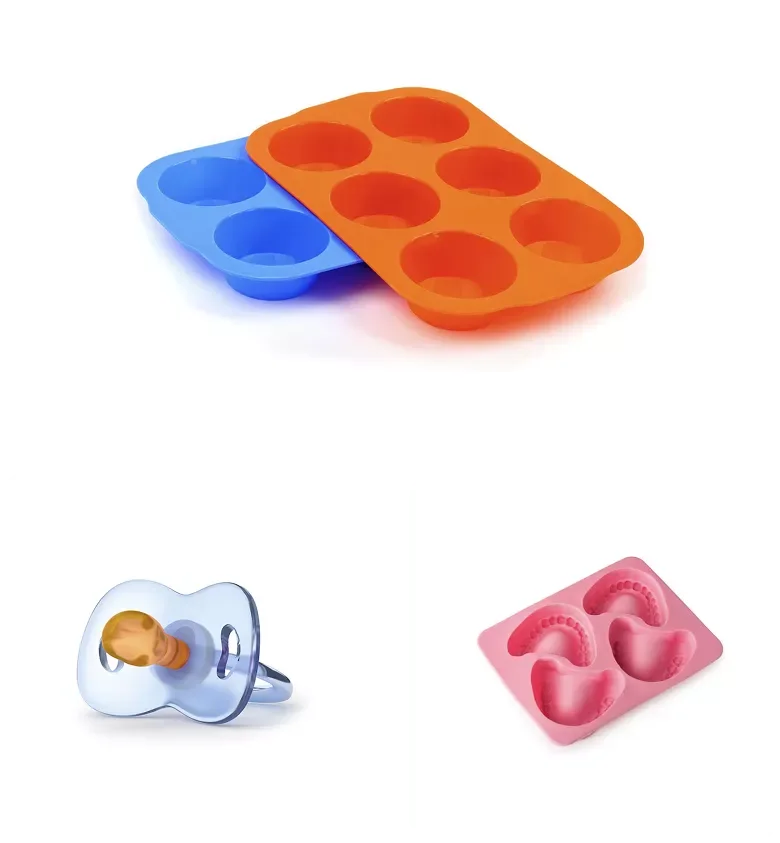
- 01Master preparation and surface approval
- 01Parting and silicone-tool design
- 01Vacuum-assisted resin casting and cure
- 01Trimming, finishing, inserts and final inspection
Bridge the gap between visual prototypes and production tooling.
Vacuum casting supports short runs for appearance models, ergonomic trials, assembly builds and market validation. Polyurethane systems can approximate different rigid, flexible, clear or heat-resistant behaviors, but they are not identical to every production thermoplastic.
- 02Low-volume sets of repeated prototype geometry
- 02Color, texture and appearance evaluation
- 02Functional assembly and user-testing builds
- 02Bridge parts while molded design or tooling is finalized
Send the requirements for a practical next step.
Plan for shrink, flexible tooling and finite mold life.
Accuracy depends on the master, silicone mold, resin system, geometry and cure. Flexible tools help release undercuts but can allow more variation than rigid production molds. Silicone degrades with use, so quantity and consistency expectations should be agreed before tooling.
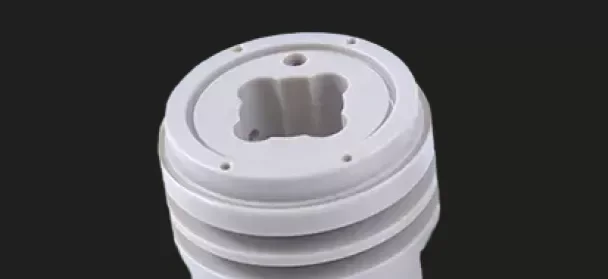
- 03Review uniform walls, trapped volumes and venting paths
- 03Identify critical fits that may need machining or selective inspection
- 03Confirm color, texture and clear-part acceptance with samples
- 03Treat quoted mold yield as geometry- and resin-dependent
Confirm the production route before order release.
Mockup's internal engineering and project teams review the required process, DFM risks, material, finishing, inspection and documentation before quoting. The quotation identifies the controlled route; partner operations follow Mockup inspection criteria and return for final reinspection before shipment.
- 04Complete straightforward sample or routine aluminum RFQs are normally quoted within 12 hours; complex five-axis, precision-tolerance, multi-process or new-material RFQs are normally quoted within 24 hours. If information is missing, engineering responds within 12 hours and the quote clock restarts when the required information is complete.
- 04Standard control includes incoming verification, in-process inspection, first-article inspection where applicable and final dimensional and visual inspection. Sampling and any full-inspection requirement are agreed from drawing characteristics and project risk.
- 04Dimensional reports, CMM results, material certificates, certificates of conformance and finish certificates can be specified during review. Availability and format depend on the ordered material, process route and project requirements; they are not automatically included with every order.
- 04DFM changes require customer written agreement followed by dual approval from the engineering supervisor and quality manager. Minor nonfunctional deviations require a quality-engineer disposition, quality-manager approval and customer notification; critical or functional deviations require customer written concession or the part is reworked or rejected.
Choose the process around geometry, quantity and evidence needs.
Vacuum Casting is one option within a wider manufacturing route. Mockup compares geometry, material behavior, quantity, secondary operations and inspection needs so the selected process solves the actual product requirement without unnecessary complexity.
- 05Geometry and access reviewed before process release
- 05Material and finish compatibility confirmed
- 05Quantity and repeatability considered together
- 05Inspection method matched to critical requirements
Carry verified process learning into the next build.
A successful vacuum casting result becomes more valuable when the approved revision, process decisions, inspection findings and known risks remain connected to the next order. Mockup reviews what must change as quantity grows and what should remain controlled.
- 06Prototype and first-article learning retained
- 06Revision and requirement review before repeat release
- 06Process controls scaled to quantity and risk
- 06Written approval for material or design changes
Define acceptance evidence before production starts.
Inspection for vacuum casting is planned from the drawing, functional risks and agreed documentation scope. Material, geometry, appearance and secondary operations are verified with methods appropriate to the process and project stage.
- 07Drawing and revision control
- 07First-article review when required
- 07In-process and final inspection
- 07Project-specific reports and certificates by agreement
Continue your project research.
Bring us the hard part.
Share your CAD and requirements. An engineer will respond with the clearest path forward.
Start a project ↗What engineers ask.
How is vacuum casting different from injection molding?+
Vacuum casting uses flexible silicone molds and cast polyurethane for short runs. Injection molding uses a rigid production tool and thermoplastic or other molding materials for a more scalable process.
Can vacuum-cast parts match production plastic exactly?+
Polyurethane systems can approximate selected appearance and mechanical behavior, but they are not necessarily chemically or functionally identical to the intended production resin.
How many parts can one silicone mold produce?+
Mold life depends on geometry, undercuts, resin, surface requirements and handling. It should be confirmed for the specific part rather than treated as a universal number.
What determines vacuum-cast accuracy?+
The master model, silicone tool, resin shrink, part geometry, cure and demolding all contribute. Critical interfaces should be identified before tooling.
Which work is controlled directly by Mockup?+
Customer review, DFM, project management, CNC programming and machining, inspection, corrective action and listed in-house secondary processes are managed internally. Any partner step is defined in the process route and reinspected before shipment.