
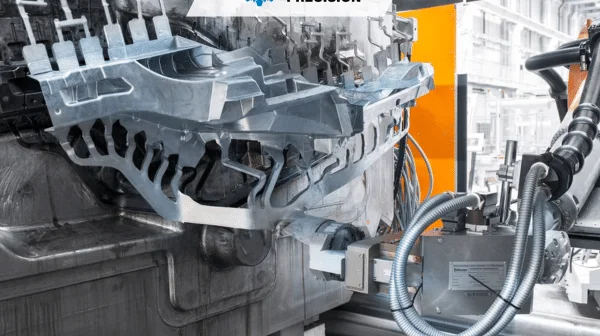
Align alloy, quantity and tool strategy before release.
Aluminum, zinc and magnesium die-casting alloys offer different density, flow, strength and finishing behavior. Expected demand, cavity strategy, tool life, machining scope and cosmetic requirements shape the appropriate program.
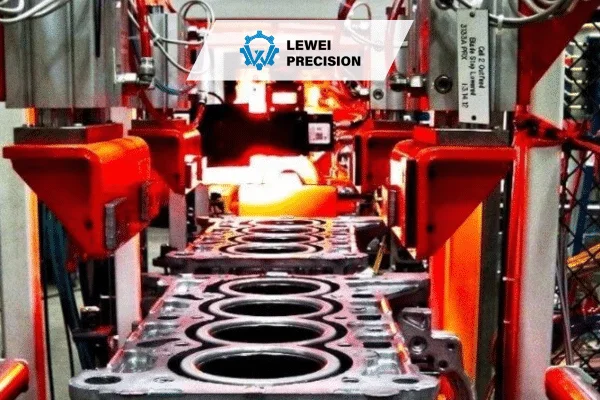
- 01Alloy selected from structural, weight, finish and environment needs
- 01Tool construction and cavity strategy based on program volume
- 01Casting and secondary machining planned from common datums
- 01Finishing, inserts and assembly requirements reviewed early
Design for fill, solidification and reliable ejection.
Uniform wall transitions, draft, radii, ribs and thoughtful parting geometry support filling and release. Thick isolated sections can create shrink risk; long flow paths, trapped air and poor overflow strategy can affect porosity and appearance.
- 02Keep walls and transitions as balanced as function permits
- 02Use draft and radii appropriate to depth and surface class
- 02Locate gates, vents, overflows and ejectors away from critical surfaces
- 02Identify pressure-tight or highly cosmetic regions during DFM
Send the requirements for a practical next step.
Reserve machining for features the casting cannot control alone.
Threads, sealing faces, bearing seats and critical interfaces may require drilling, tapping, milling or reaming after casting. Machining allowance and datum features should be built into the casting so secondary work removes predictable stock without exposing defects.
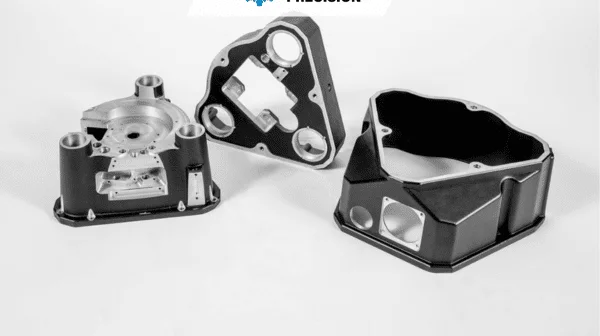
- 03Define cast versus machined dimensions on the drawing
- 03Provide stable locating surfaces for secondary fixtures
- 03Plan leak testing or impregnation only where required
- 03Coordinate deburring, blasting, coating and cosmetic repair standards
Approve tool, process and downstream work as one result.
Initial casting trials should evaluate fill, porosity risk, dimensions, ejection, machining stock and finish response. Tool corrections and process settings must be documented before the program moves to repeat production.
- 04Review first samples in the final machined and finished condition
- 04Validate critical characteristics and functional tests
- 04Record cavity and tool corrections by revision
- 04Define ongoing inspection, tool maintenance and change control
Confirm the production route before order release.
Mockup's internal engineering and project teams review the required process, DFM risks, material, finishing, inspection and documentation before quoting. The quotation identifies the controlled route; partner operations follow Mockup inspection criteria and return for final reinspection before shipment.
- 05Complete straightforward sample or routine aluminum RFQs are normally quoted within 12 hours; complex five-axis, precision-tolerance, multi-process or new-material RFQs are normally quoted within 24 hours. If information is missing, engineering responds within 12 hours and the quote clock restarts when the required information is complete.
- 05Standard control includes incoming verification, in-process inspection, first-article inspection where applicable and final dimensional and visual inspection. Sampling and any full-inspection requirement are agreed from drawing characteristics and project risk.
- 05Dimensional reports, CMM results, material certificates, certificates of conformance and finish certificates can be specified during review. Availability and format depend on the ordered material, process route and project requirements; they are not automatically included with every order.
- 05DFM changes require customer written agreement followed by dual approval from the engineering supervisor and quality manager. Minor nonfunctional deviations require a quality-engineer disposition, quality-manager approval and customer notification; critical or functional deviations require customer written concession or the part is reworked or rejected.
Choose the process around geometry, quantity and evidence needs.
Die Casting is one option within a wider manufacturing route. Mockup compares geometry, material behavior, quantity, secondary operations and inspection needs so the selected process solves the actual product requirement without unnecessary complexity.
- 06Geometry and access reviewed before process release
- 06Material and finish compatibility confirmed
- 06Quantity and repeatability considered together
- 06Inspection method matched to critical requirements
Carry verified process learning into the next build.
A successful die casting result becomes more valuable when the approved revision, process decisions, inspection findings and known risks remain connected to the next order. Mockup reviews what must change as quantity grows and what should remain controlled.
- 07Prototype and first-article learning retained
- 07Revision and requirement review before repeat release
- 07Process controls scaled to quantity and risk
- 07Written approval for material or design changes
Continue your project research.
Bring us the hard part.
Share your CAD and requirements. An engineer will respond with the clearest path forward.
Start a project ↗What engineers ask.
Which alloys are commonly pressure die cast?+
Aluminum, zinc and magnesium alloy families are common. Selection depends on strength, weight, flow, corrosion, finish, dimensional and commercial requirements.
Why do die-cast parts still need machining?+
Casting can create complex near-net geometry, while critical bores, threads, sealing faces and precision interfaces may need secondary machining for function and inspection.
When does die casting make economic sense?+
When repeat demand and part geometry justify dedicated tooling. Compare total tooling, casting, machining, finishing and quality scope against alternative processes.
Which work is controlled directly by Mockup?+
Customer review, DFM, project management, CNC programming and machining, inspection, corrective action and listed in-house secondary processes are managed internally. Any partner step is defined in the process route and reinspected before shipment.