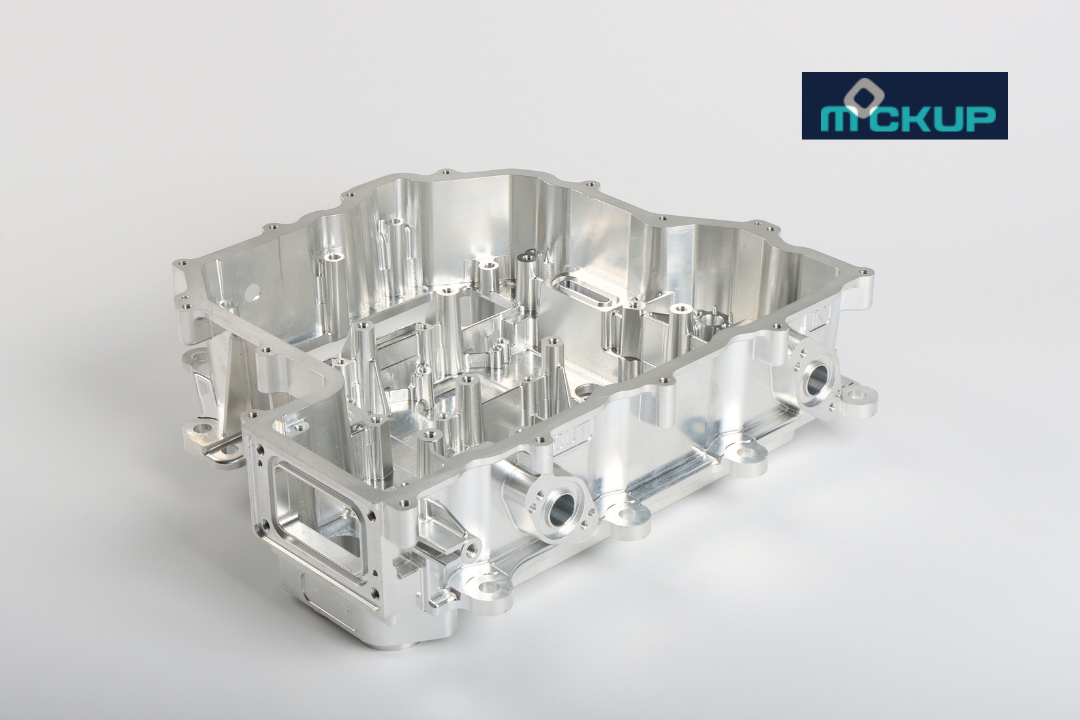
Lightweight, machinable and ready for functional hardware.
Aluminum combines low density with useful strength, good thermal conductivity and broad finishing options. It machines efficiently into housings, brackets, heat-management parts and precision mechanisms, making it a practical choice from early prototypes through repeat production. The right alloy and temper still depend on load, environment, stock form and post-processing.

- 01Low mass for mobile, aerospace and robotic assemblies
- 01Efficient material removal for complex CNC geometry
- 01Good thermal and electrical conductivity
- 01Anodized, conversion-coated, plated, painted or used as machined
The balanced default for many CNC aluminum parts.
6061-T6 is widely specified because it balances machinability, strength, corrosion resistance, weldability, availability and predictable anodizing response. It is a strong starting point for general-purpose machined components when the design does not demand the higher strength of 7075 or the sheet-forming behavior of 5052. Published values are general references; drawing requirements and the purchased material specification control.

- 02Reference yield strength: approximately 276 MPa in T6 condition
- 02Reference density: approximately 2.70 g/cm³
- 02Common uses: housings, fixtures, brackets, frames and heat sinks
- 02Good response to clear, color and hard anodizing when requirements are defined
Higher strength for demanding lightweight structures.
7075-T6 is selected when strength-to-weight ratio and fatigue performance matter more than weldability, corrosion resistance or raw-material cost. It machines cleanly into highly loaded brackets, mechanisms and precision tooling, but its temper, grain direction, stress concentration and protective finish deserve deliberate review for critical applications.

- 03Reference yield strength: approximately 503 MPa in T6 condition
- 03Reference density: approximately 2.81 g/cm³
- 03Common uses: aerospace fittings, robotic links and high-load fixtures
- 03Fusion welding is generally avoided; mechanical fastening is usually preferred
- 03Use generous radii at fatigue-loaded transitions
- 03Review corrosion exposure and protective finishing before release
Choose the grade around the part’s real failure mode.
A higher-strength alloy is not automatically the better material. Start with how the part is loaded, whether it will be welded or formed, the corrosion environment, available stock and the finish. Mockup confirms grade, temper and product form during review so a convenient substitution does not quietly change performance.
- 046061-T6 — balanced machinability, weldability, corrosion resistance and cost
- 047075-T6 — higher strength and fatigue performance; lower weldability and corrosion resistance
- 045052-H32 — strong corrosion resistance and formability for sheet-metal parts
- 046063-T6 — strong extrusion and cosmetic-finish response for profiles
- 042024-T3 — good fatigue performance, but usually needs corrosion protection
- 04MIC-6 — cast tooling plate for fixtures and dimensionally stable plate work
Match aluminum’s strengths to the assembly around it.
CNC aluminum is well suited to parts that need stiffness without unnecessary mass, precise interfaces and a production-quality appearance. Geometry, wall thickness, contact materials, heat flow and environmental exposure determine whether aluminum is the correct system-level choice.

- 05Aerospace and drone brackets, mounts and development hardware
- 05Robotic end effectors, actuator housings and structural links
- 05Electronics enclosures, heat sinks and thermal plates
- 05Automotive fixtures, sensor bodies and test equipment
- 05Optical mounts, laboratory hardware and inspection fixtures
- 05Consumer-product frames, knobs and production-intent prototypes
Specify appearance and function before machining begins.
Finishing can improve corrosion resistance, wear performance, appearance or electrical behavior, but it can also change dimensions and edge condition. Define coating type, color, texture, masking, cosmetic zones and critical fits with the RFQ so machining allowance and inspection can be planned together.

- 06As machined for the fastest functional route
- 06Bead blast for a uniform matte texture before anodizing
- 06Type II anodizing for corrosion resistance and color
- 06Type III hard anodizing for harder wear surfaces
- 06Chemical conversion coating where conductivity or paint preparation matters
- 06Powder coating, painting, plating, brushing and polishing by requirement
Remove complexity that does not improve the part.
Aluminum cuts quickly, but deep cavities, thin walls, tiny corner radii, excessive setups and blanket tight tolerances can dominate price. The most economical design keeps tools rigid, gives cutters access and reserves demanding controls for the interfaces that actually affect fit or performance.
- 07Use the largest practical internal corner radii
- 07Avoid deep, narrow pockets and unnecessary undercuts
- 07Keep related critical features in a common setup where practical
- 07Apply tight tolerances and surface-finish callouts only to functional areas
- 07Use standard hole, thread and stock sizes when the design allows
- 07Evaluate 6061 before specifying a premium high-strength alloy for a prototype
Bring us the hard part.
Share your CAD and requirements. An engineer will respond with the clearest path forward.
Start a project ↗What engineers ask.
Which aluminum alloy is best for CNC machining?+
6061-T6 is the common balanced starting point. Choose 7075 when higher strength and fatigue performance justify the added cost and reduced weldability; use other grades when forming, corrosion exposure, extrusion quality or dimensional stability drives the decision.
Can CNC machined aluminum be anodized?+
Yes. 6061 generally responds well to Type II decorative anodizing and Type III hard anodizing. Alloy, surface preparation and lot variation can affect appearance, while coating buildup must be planned on fits, threads and masked areas.
Is 6061 stronger than 7075?+
No. In common T6 tempers, 7075 has substantially higher yield strength. 6061 is typically easier to weld, more corrosion resistant, more widely available and more economical.
What should I send for an aluminum machining quote?+
Send a STEP or Parasolid model plus a PDF drawing showing tolerances, threads, surface finish, material grade and temper, finishing, quantity, inspection needs and any certification requirements.